Ensuring environmental sustainability is a key concern for businesses, educational institutions, publishers and individuals. Digital publishing is becoming a viable option to traditional paper-based communication as organizations seek ways to cut down on waste and be more efficient with their resources.
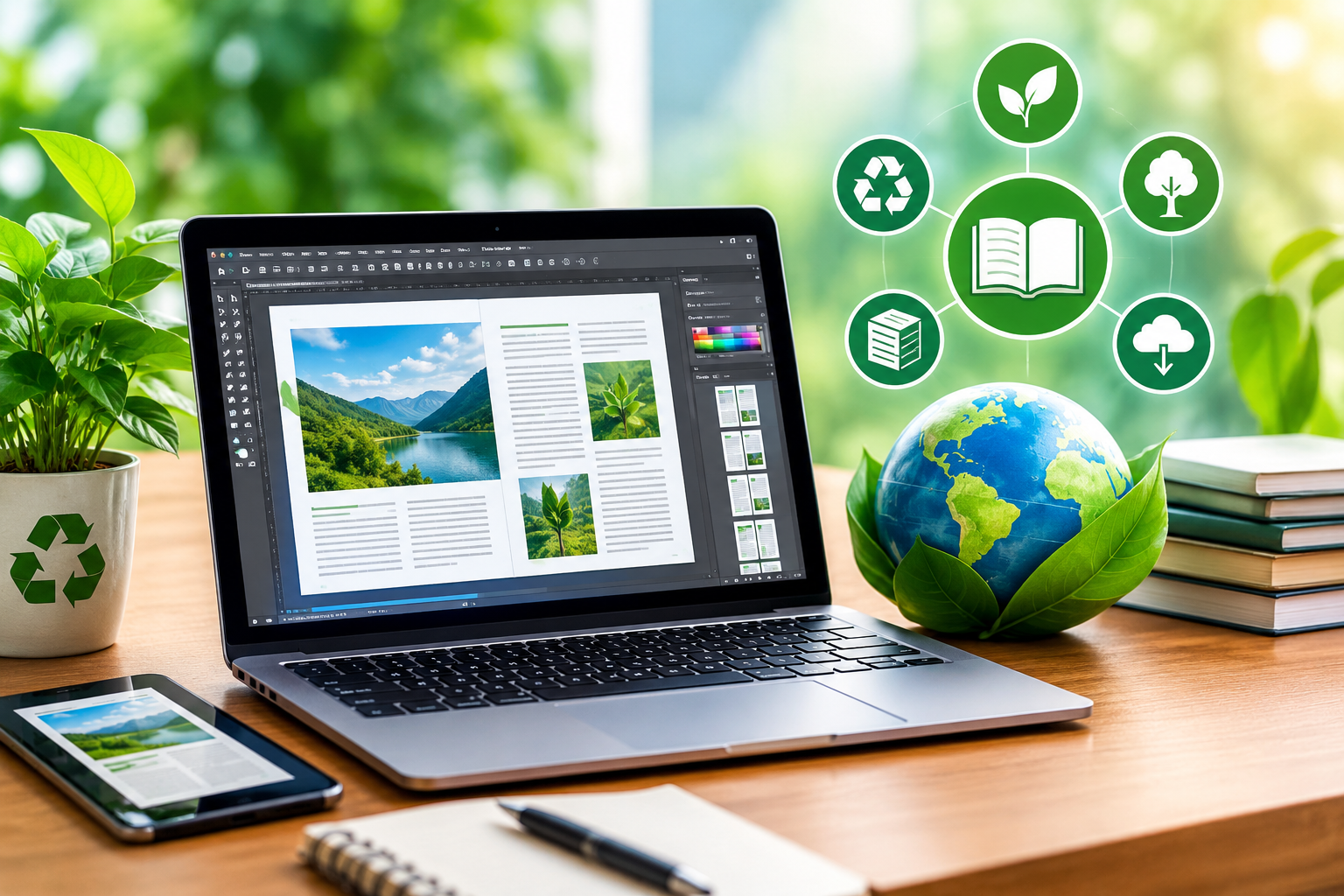
Digital publishing and document design are the keywords that are associated with shotscribus software. Those interested in this subject might want to learn how software publishing can help with sustainable and eco-friendly practices and help lessen reliance on printed materials.
Digital publishing enables users to produce, modify, and publish documents in digital format. Organizations can share informational documents, brochures, newsletters and other reports with their target audiences instead of printing them.
While software solutions are not the answer to environmental issues, when used wisely, digital publishing tools can help to create more sustainable workflows. This article examines the possibilities of digital publishing to minimize use of paper and other resources, and to contribute to sustainable communication.
Understanding Shotscribus Software and Digital Publishing
It can be mentioned that Shotscribus software can be talked in a bigger arena of digital publishing tools which are used to design and prepare documents.
Digital Publishing is the development and dissemination of digital content. They can be digital magazines, brochures, newsletters, reports, educational documents, and promotional documents.
The traditional publishing industry has material costs, such as paper and ink, printing, packaging, and shipping. Some of these can be avoided in digital publishing because they can be sent electronically.
For instance, a business could send a virtual brochure to customers rather than printing hundreds of copies. An educational institution may distribute study materials via an internet site rather than creating a big volume of print study materials.
These practices can make organizations think twice about producing and sharing information.
How to Waste Less Paper Using Digital Publishing
Effectively reducing paper use is one of the most obvious environmental advantages of digital publishing.
Paper-making involves raw materials, energy input and consumption, and industrial processing, as well as the use of water. Paper can be recycled, but the environmental impact of creating and bringing printed products to the market remains.
Many communication requirements can be met with digital documents.
Digital publishing can be used to produce:
- Customer & employee electronic newsletters.
- Digital brochures for product and service promotion.
- Business Communication – online reports.
- Electronic educational materials for students.
- E-publications and information magazines.
- Online event programs and announcements.
Organizations can help limit the need for paper use with routine communication tasks by providing these materials electronically.
But it is not the case that digital publishing means no paper. Businesses should assess the needs and select the digital format which is beneficial for the business.
Supporting Sustainable Business Communication
Every business creates documents on a regular basis and for a variety of reasons for customers, employees, suppliers, and partners.
Printed catalogs, promotions, flyers, product guides and internal reports are traditional methods of communication.
Digital publishing can enable many of these activities to go online.
For instance, if a business introduces a new offer, they may create a digital folder and distribute it by means of their web site and e-mails.
This method could save on the need to re-print products when price, product information or promotions change.
Digital documents can also be modified more readily than print documents, which reduces the need to reprint the documents.
How Digital Publishing Can Reduce Waste
Printed materials may become obsolete with the changing of information.
Businesses might have to get rid of brochures, catalogues, or docs that have inaccurate pricing, out-of-date contact information or discontinued products.
- Digital publishing is more flexible since electronic documents can be updated and republished.
- Digital publishing can help to minimize waste in a variety of ways, such as:
- Keeping electronic documents up-to-date rather than reprinting.
- Sharing in electronic format, instead of large print runs.
- Using internet and other online means to disseminate reports.
- Using digital invitations for events.
Switching from printed to electronic manuals that are accessed regularly.Switching from a printed to an electronic version of manuals that are accessed regularly.
The following practices can help minimize waste of materials.
Improving Resource Efficiency
Digital publishing can also help to use organizational resources more efficiently.
Electronic distribution of documents can help businesses save on paper, printing, storage, and transportation costs.
For instance, a business that used to print thousands of product brochures could convert to an online document library.
The company doesn’t need to have a huge stock of printed resources to satisfy customers’ requests.
Digital workflows could also minimize the amount of physical space that needs to be taken up and facilitate better access to information by employees.
These may benefit the environment and also help in improving operations.
Digital Publishing in Education
There are many instances where educational institutions generate a lot of print materials such as course notes, worksheets, reading lists, newsletters and administrative documents.
Many of these activities can be provided in a practical way in digital publishing.
Electronic learning materials can be sent to teachers and documents can be accessed by students via computer, tablet, or smartphone.
Digital educational resources can comprise:
- Use of electronic textbooks/study guides.
- Online classroom newsletters.
- Use of digital worksheet and assignments.
- Electronic course schedules.
- Online research reports.
- Digital presentations and learning materials.
These tools can help to minimise print usage and provide easy access to educational information.
Institutions should however take into account students that might not have access to the internet or appropriate digital equipment.
Where needed, offering both print and electronic versions can help to meet access and inclusion needs.
Environmental benefits of digital distribution
There is more to publishing than paper.
Printed documents might need packaging, transport and distribution to reach their target audience.
In a lot of cases, digital distribution can cut down on the delivery of physical products.
For instance, electronic publications can be disseminated via e-mail, websites, cloud storage and digital libraries.
Potential benefits include:
- Decreased need for print based resources.
- Minimising packaging used for print publications.
- Less need for transporting documents.
- Improved access to current data.
- Lower printed inventory storage needs.
The actual impact on the environment would vary depending on the kind of document, distribution and digital infrastructure.
The Role of Technology in Sustainable Publishing
There is a number of ways modern publishing technology can help in the production and dissemination of documents.
The digital design software can assist the user to make professional documents and the cloud-based services can be used for collaboration and electronic sharing.
Various organisations also have the opportunity to gain insight into the behaviour of audiences using analytics when they access digital publications.
Such technologies can assist companies decide whether or not to create materials that are valuable or not, and steer clear of creating materials that are not valuable.
AI can aid certain publishing workflows, such as editing and organizing content as well as preparing documents.
Digital systems, however, also use electricity and electronic devices and infrastructure.
Therefore, energy efficiency, device lifespan and the environmental costs of electronic systems should be taken into account in responsible digital publishing.
Writing Problems and Responsible Digital Publishing
Digital publishing has a number of opportunities for the environment, but it also has its limitations.
Materials and energy are needed to make and use electronic devices. Electricity is also used by data centers and network infrastructure.
Organizations need not to assume that all digital documents are automatically more sustainable than all printed documents.
To do so, it is important to adopt a responsible approach, such as:
- Practical and useful use of digital formats.
- Preventing unnecessary duplication of electronic files.
- Making documents easier to access.
- Promote the reuse of supporting devices and recycling.
- Making content accessible to various target groups.
- Limiting prints only when there is a need for them.
These practices enable organisations to better inform their sustainability decisions.
Conclusion
Shotscribus software is a word that relates to digital publishing and document design. The whole idea of digital publication shows the possibilities of organisations in discovering other environmentally friendly ways of producing and disseminating information.
Digital publishing can help create more sustainable workflows by lowering the use of paper, the amount of obsolete printed materials, and the need for efficient use of resources, as well as through electronic communication.
But software is not enough to ensure environmental benefits. Publishing activities have far-reaching consequences for organisations and it is important for them to take their digital effects into account when making decisions about solutions that include environmental, resource and practical considerations.
By leveraging digital publishing with strategic planning, businesses, educational institutions, or individuals can effectively communicate and minimize the reliance on printed media.