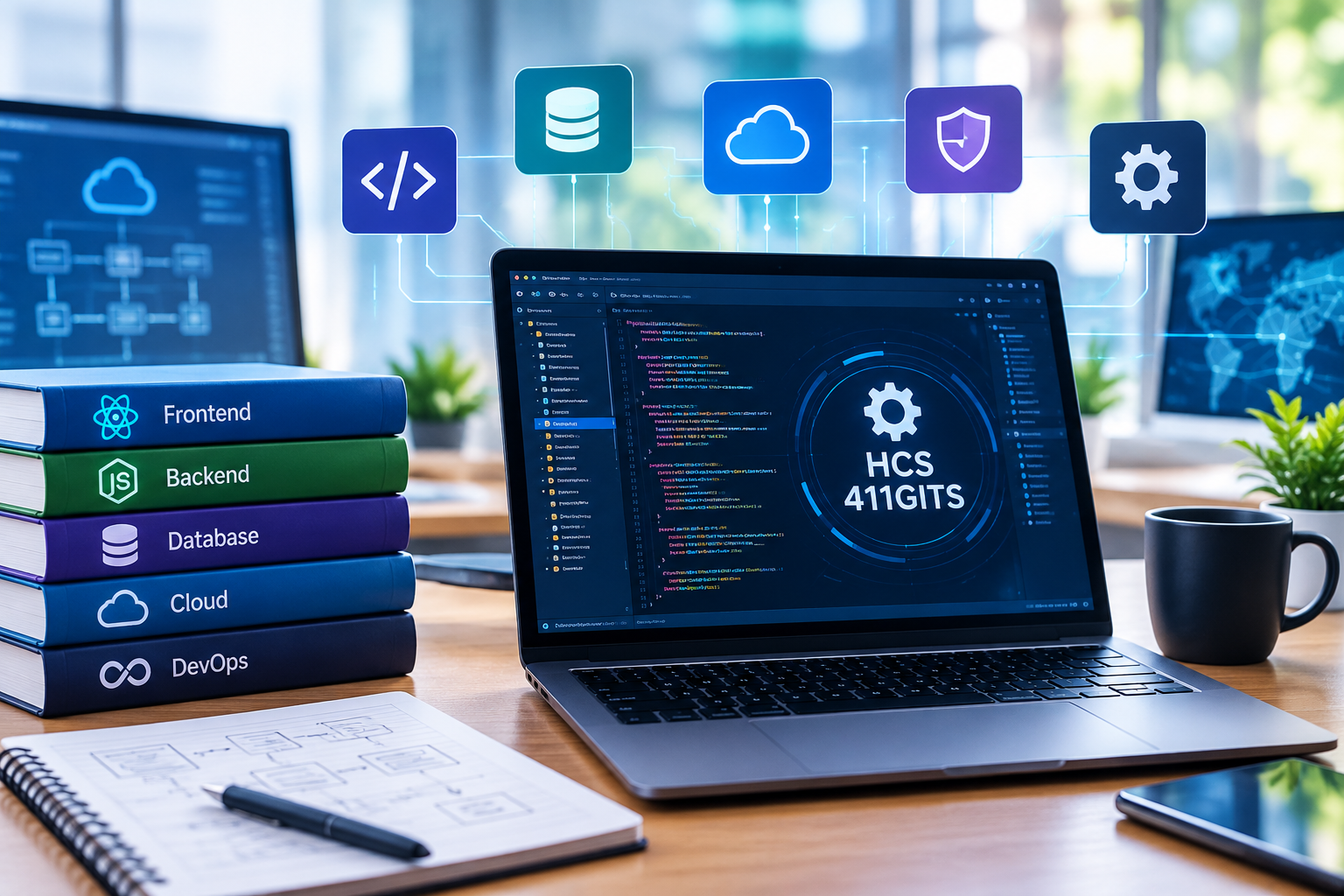
With the advent of technology, software development has become an integral part of the business world, assisting businesses, organizations, and individuals in managing information, automating processes, and boosting productivity. One of the numerous software-related subjects that have caught interest is the HCS 411GITS software, and its evolution, technical design, and technologies that might contribute to the software’s functionality.
The software development process has various key elements such as planning, programming, system architecture, database management, testing, and deployment, which are important to understand. Every phase is crucial in the process of converting an idea into a working software product.
Technical details of the HCS 411GITS software are not publicly available, but detailed examination of the general principles of software engineering is useful and can provide some insight into the design and development of such a system.
What Is HCS 411GITS Software?
HCS 411GITS software refers to a software-based term in the context of users’ research on technology, digital tools or specialized applications. The exact purpose, developer, architecture and features supported should be verified by the official documentation or verified software source.
When installing or using unfamiliar software, it is important to know what it is and whether it is intended for a specific Operating System, organisation or technical environment.
Software development is a process of designing and building software applications that are designed to carry out specific functions via user interactions, data processing and programming instructions.
A software system could contain:
- A user interface to interact with the application.
- A machine that performs computations.
- A database for storing and retrieving information.
- Security mechanisms that safeguard valuable information.
- Integration tools: Software that integrates with other applications.
The following components are basic concepts for the understanding of the structure of software applications.
How is the HCS 411GITS Software developed?
There are a number of steps that need to be taken before a software is built. The first step in developing an application is to determine the purpose of the application and what the users would like to get from the application.
Typically the software development process involves various stages, each of which affects the quality, reliability, and usability of the software.
1. Requirement Analysis and Planning
The initial step is to comprehend what the software is looking for and what capabilities it’s supposed to have.
The problem(s) the software is expected to solve are identified by developers, project managers and stakeholders.
At this phase, the team can decide on:
- The most important function of the application.
- The users and application environment for the intended use.
- Features and functions that are essential.
- Security and performance requirements.
- Conformity of other systems.
Having a clear development plan can minimize confusion and the likelihood of unwanted changes down the road.
2. Software Architecture and Design
Once the needs have been determined, the next step for the developers is to develop a technical design, which describes how the application will operate.
Software architecture is about how various software parts interrelate and how information flows within the system.
The common structure of such architecture might consist of a front-end, a back-end, a database and a communication layer.
The frontend deals with the user experience, and the backend processes, business logic and operations of the application.
The database contains data needed for the software.
Proper design of application architecture makes it easier to maintain, update and expand.
3. Programming and Development
Programming is the phase during which software designers transform their design into instructions that can be executed by the computer.
Python, Java, JavaScript, C++ and C# are some of the options that can be used by developers depending on what the application needs.
There are benefits to each of the programming languages.
For instance, Python is frequently used when developing automated systems or applications that process data, and JavaScript is often used for interactive web-based applications.
The language selected is dependent upon the desired functionality, performance, development environment and compatibility.
Without verified technical documentation it would be incorrect to state that HCS 411GITS software is written in a specific programming language.
Technologies that could provide the power for software development.
Modern software applications are built with more than one technology to ensure reliability of functionality.
4. Programming Languages
Programming Languages are the building blocks of software applications.
These enable the developer to specify instructions, manipulate information and design application logic.
Some of the most common programming languages are:
- Introduction to programming with Python for automation and data processing.
- Java for enterprise and cross-platform applications.
- Interactive web development using JavaScript.
- C++ for Performance Applications.
- C# for application development in the Microsoft platform.
The technologies applied to a particular application will vary depending on the design and requirements.
5. Database Management Systems
There are many applications that need the information to be stored and organised in databases.
There are several different database technologies available including MySQL, PostgreSQL, Microsoft SQL Server and SQLite, which have varying uses and storage and data-management requirements.
Database can be used to store, retrieve, and structure information efficiently, as well as maintain records.
Different database technologies are chosen depending on the size of the application, complexity of the data, performance and security requirements.
6. User Interface Technologies
The user interface is the way people have to interact with the software.
- HTML, CSS, JavaScript, and frontend frameworks can be used by developers for web applications.
- It can be the native interface libraries or cross-platform frameworks for desktop applications.
- Software that is user-friendly and easy to understand has a good interface.
- This chapter explores the role of software testing and the quality assurance process.
- Testing is an essential component of software development, as any software can have bugs.
- Quality assurance can be used to find software problems before they are released to the users.
There are a number of kinds of testing that can be done by the developers:
- Unit testing: Tests a particular function or component.
- Integration testing: Tests that components are integrated.
- Performance testing: Tests the application for performance under various workloads.
- Security testing: Finds weaknesses and vulnerabilities.
- UAT: Verifies that the application fulfills the expectation of users.
Testing enhances the reliability and minimizes software failures.
The specific testing procedures might vary for a software system like HCS 411GITS, depending on its intended use and implementation.
7. Security and Data Protection
Security should be considered during the entire software development life cycle.
User information, business records or other sensitive data can be processed in applications. Developers need to therefore take into account how information is maintained, retrieved and shared.
Common security measures are:
- Verifying users’ identities by means of authentication.
- Implementing access control to limit access.
- Encrypting sensitive information.
- Regularly updating software requirements.
- Monitoring application activity.
- Addressing weaknesses as they are identified.
Security should be considered not as a last resort. It should be part and parcel of the development process right from the start.
8. Deployment and Maintenance
After software development and testing, software has to be installed in the desired environment.
This can be done by installing the application on a computer, running it on a server, or by hosting it in the cloud.
Following the deployment, the application is monitored by developers and problems are solved.
Software maintenance can involve bug fixes, performance enhancements, dependency updates, and the addition of new features.
Regular maintenance ensures software continues to run on new operating systems, hardware, and security demands.
Why Understanding Software Development Matters
Understanding the structure of software enables users to make informed decisions about software.
Knowing how to develop software can also enable organizations to more effectively assess applications, determine technical needs and discuss with software developers.
You should verify information about the software’s publisher, documentation, platforms, and purpose when researching HCS 411GITS software.
This information can be useful to differentiate between accurate and misleading or inaccurate software resources.
Conclusion
For an accurate answer, the technical documentation of the HCS 411GITS software is needed to answer the question of how it was created and what technologies it uses for its development.
The general software development process, however, is an example of how software applications are developed and produced: requirement analysis, planning of the architecture, coding, database integration, testing, security, and deployment.
Programming languages, Databases, interfaces and Testing are all present and play a part in the creation of modern software.
These are concepts that, if understood, will help readers to have a clearer understanding of software engineering, and to more closely analyse unfamiliar software.
Check the origin, technical requirements and the use of HCS 411GITS software before downloading and installing it, to be sure that it suits the purpose.