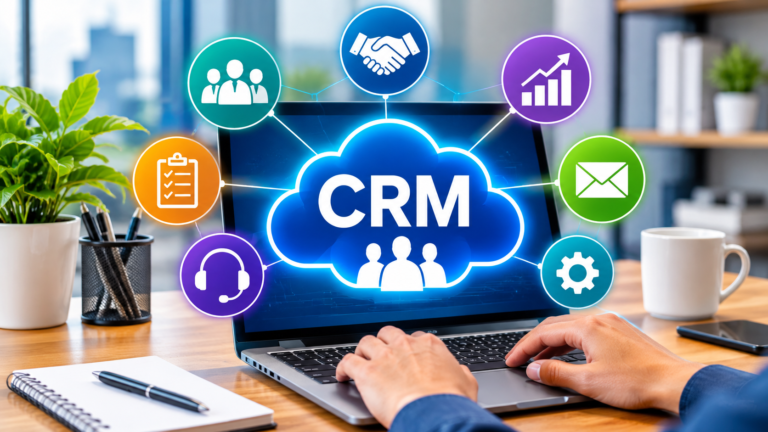
In the current, fiercely competitive business landscape, enterprises require robust systems to orchestrate daily operations, elevate productivity, and secure sustainable expansion.
The reliance on disparate software applications to govern distinct departments frequently engenders communication silos, fosters data redundancy, and precipitates avoidable operational inefficiencies.Enterprise Resource Planning (ERP) software emerges as a pragmatic remedy, consolidating critical business processes onto a unified, centralized platform.
ERP Software serves as a comprehensive framework enabling organizations to administer critical functions ranging from finance, inventory, and human resources to sales, procurement, production, and customer data management.
By integrating these disparate departments into a unified ecosystem, enterprises can significantly enhance operational coordination, ensure access to precise information, and facilitate more informed strategic decision-making.Consequently, whether for small-scale enterprises or multinational corporations, ERP solutions have emerged as a pivotal component of the broader digital transformation initiative.
The relentless progression of technology is driving the integration of cloud computing, artificial intelligence, automation, and sophisticated analytics into contemporary Enterprise Resource Planning (ERP) systems.
These transformative innovations are fundamentally reshaping operational paradigms and redefining competitive dynamics within the digital marketplace.
Understanding What ERP Software Is
ERP Software constitutes a comprehensive business management framework engineered to unify disparate organizational functions within a single, integrated platform.
Rather than depending on isolated applications to serve distinct departments, enterprises leverage ERP systems to administer information and streamline operational processes with markedly greater efficiency.
For instance, upon the submission of a customer order, an Enterprise Resource Planning (ERP) system facilitates seamless integration between the sales department and the units responsible for inventory management, accounting, and logistics.
This connectivity empowers staff to retrieve real-time data and effectively synchronize their respective operational duties.
Common ERP modules include:
- Financial management and accounting.
- Inventory and warehouse management.
- Human resource management.
- Sales and customer relationship management.
- Purchasing and procurement.
- Manufacturing and production planning.
- Supply chain management.
- Reporting and business analytics.
These modules empower enterprises to streamline operational workflows and exert superior command over their resource allocation.
Improving Business Productivity and Efficiency
A paramount benefit of Enterprise Resource Planning (ERP) software lies in its capacity to elevate operational efficiency.
Conventional business methodologies frequently entail redundant data input, arduous manual computations, and disjointed reporting infrastructures.Such practices not only exact a substantial temporal cost but also heighten the susceptibility to inaccuracies.
Enterprise Resource Planning (ERP) solutions streamline numerous routine operations and facilitate seamless data integration across organizational departments.
By eliminating the necessity of redundant data entry into disparate applications, staff members can execute their duties with significantly greater efficiency.
Consequently, an ERP platform facilitates the automatic synchronization of inventory records upon the conclusion of a sales transaction, thereby enabling the accounting department to access pertinent transactional data in real time without the delay of generating separate reports.
By diminishing the burden of manual labor and enhancing operational coordination, Enterprise Resource Planning (ERP) systems enable personnel to dedicate their focus to critical business imperatives.
Strengthening Financial Management
Effective financial stewardship serves as the cornerstone for sustaining corporate stability and driving profitability.
Organizations must rely on precise data regarding revenue streams, expenditures, cash flow dynamics, budgetary allocations, and overall financial performance to navigate their operations successfully.
Enterprise Resource Planning software furnishes cohesive financial management capabilities, enabling organizations to systematically orchestrate accounting operations and oversee financial transactions with precision.
Important capabilities include:
- Automated invoice generation.
- Expense tracking and management.
- Accounts payable and receivable.
- Budget planning and monitoring.
- Financial reporting.
- Cash flow management.
- Tax-related record organization.
Such functionalities empower finance departments to retrieve current data and generate reports with heightened efficiency.
Concurrently, business executives leverage these financial insights to assess organizational performance, regulate expenditures, and strategize future capital investments.
Enhancing Inventory and Supply Chain Management
Inventory management represents a formidable challenge for enterprises spanning the manufacturing, retail, distribution, and e-commerce sectors.
Inadequate inventory control precipitates a cascade of detrimental outcomes, including surplus stockpiles, critical product shortages, delayed shipments, and inflated operational expenditures.
Enterprise Resource Planning (ERP) systems empower organizations to oversee stock quantities, direct warehouse operations, and synchronize procurement workflows.
Enterprises leverage Enterprise Resource Planning (ERP) systems to meticulously trace product circulation, administer inventory levels, catalog supplier details, and supervise both inbound and outbound order flows.
Integrated supply chain management further enhances communication channels among suppliers, warehousing facilities, production units, and distribution divisions.
Enhanced inventory visibility empowers organizations to formulate well-informed purchasing strategies and optimize order fulfillment processes.
Improving Human Resource Management
Human capital stands as the paramount asset within any enterprise, rendering the seamless integration of recruitment strategies, attendance monitoring, payroll administration, personnel documentation, and performance analytics indispensable for effective organizational stewardship.
Enterprise Resource Planning (ERP) systems incorporate human resource management functionalities designed to streamline a wide array of administrative tasks.
HR teams can use these systems to:
- Maintain employee records.
- Administer attendance tracking and the processing of leave applications.
- Organize payroll information.
- Monitor recruitment activities.
- Track employee training.
- Support workforce planning.
- Generate HR reports.
The automation of routine human resources functions significantly diminishes administrative burdens, thereby enabling HR specialists to dedicate greater attention to critical strategic initiatives such as employee development, workplace engagement, and organizational planning.
Supporting Better Business Decisions Through Data Analytics
The efficacy of sound business strategy is inextricably linked to the availability of precise and current data.
The deployment of fragmented systems across departments often impedes managerial insight into the organization’s holistic performance.
Enterprise Resource Planning (ERP) software facilitates centralized reporting and analytics capabilities, enabling organizations to comprehensively assess a diverse range of operational functions.
Consequently, managers are empowered to scrutinize sales performance, inventory expenditures, production efficiency, and financial statements via unified dashboards.
Such insights empower organizations to pinpoint performance deficiencies, capitalize on emerging business prospects, and adapt effectively to shifting market dynamics.
Furthermore, certain sophisticated ERP systems incorporate predictive analytics, empowering organizations to project demand, calculate resource needs, and pinpoint emerging operational hazards.
Improving Customer Service and Satisfaction
The cultivation of enduring commercial alliances is inextricably linked to customer satisfaction.
In this context, clients anticipate precise product specifications, punctual delivery schedules, transparent lines of communication, and dependable support mechanisms.
ERP Software facilitates the enhancement of customer service by seamlessly integrating critical functions, including sales, inventory control, order management, and financial data.
Upon the placement of an order, staff members are empowered to ascertain product availability, scrutinize the order’s current status, and orchestrate delivery logistics with heightened efficiency.
The convergence of Enterprise Resource Planning (ERP) systems with Customer Relationship Management (CRM) platforms yields profound insights regarding client preferences, procurement patterns, and interaction logs.
This integrated methodology empowers organizations to adeptly address customer needs while ensuring a consistently superior service experience.
The Role of Cloud-Based ERP Software
The advent of cloud technology has fundamentally transformed organizational approaches to accessing and administering enterprise business software.
Conventional ERP solutions, by contrast, frequently demand considerable on-site infrastructure coupled with rigorous technical upkeep.
Cloud-based Enterprise Resource Planning systems enable organizations to utilize software via internet-connected terminals, contingent upon the provider’s infrastructure reliability and security protocols.
Some important advantages include:
- Authorized personnel are granted flexible access.
- A diminished reliance on local server infrastructure.
- Simplified software updates.
- Support for remote collaboration.
- Scalable subscription options.
- Integration with other cloud-based applications.
Cloud-based Enterprise Resource Planning (ERP) systems offer a distinct advantage to expanding enterprises, enabling them to leverage contemporary management capabilities while eschewing the burden of maintaining substantial internal infrastructure.
Prior to committing to a specific cloud solution, organizations must meticulously assess critical factors including data security protocols, service reliability, integration capabilities, and subscription expenditures.
Choosing the Right ERP Software for Your Business
The choice of an Enterprise Resource Planning (ERP) platform constitutes a pivotal strategic decision, as its implementation invariably exerts a profound impact across numerous departments and core business processes.
Organizations must initially pinpoint their operational impediments and ascertain which functionalities are indispensable to address their specific needs.
Several factors should be considered:
- When selecting software, it is imperative to ensure that the solution aligns precisely with your organization’s specific industry, scale, and routine operational demands.
- The intuitive nature of the interface significantly fosters employee adoption while simultaneously mitigating the complexities associated with training requirements.
- Scalability: The system should support future business expansion and increasing transaction volumes.
- The enterprise resource planning (ERP) software must be capable of interfacing with current applications as required.
- Security protocols must be rigorously assessed, encompassing the evaluation of access controls, data safeguarding mechanisms, backup infrastructure, and adherence to regulatory compliance mandates.
- Successful adoption hinges critically on the provision of dependable technical support and comprehensive employee training.
Evaluating the capabilities of various ERP vendors alongside a meticulous examination of their respective implementation methodologies empowers enterprises to discern the most prudent capital allocation.
The Future of ERP Software in Modern Businesses
The trajectory of Enterprise Resource Planning (ERP) technology remains robust, propelled by the escalating integration of sophisticated digital infrastructures within organizational frameworks.
Concurrently, the synergistic convergence of artificial intelligence, machine learning, automation, and cloud computing is fundamentally reshaping the landscape of business management, thereby unlocking unprecedented avenues for operational optimization and strategic decision-making.
AI-driven enterprise resource planning (ERP) systems empower organizations to scrutinize extensive datasets, discern anomalous patterns, and refine demand forecasting capabilities.
Concurrently, intelligent automation streamlines the reduction of repetitive administrative burdens, thereby facilitating accelerated operational workflows.
Contemporary ERP systems are progressively prioritizing capabilities such as instantaneous reporting, integrated application ecosystems, mobile accessibility, and enhanced user interfaces.
Looking ahead, enterprises stand to gain substantial advantage from increasingly intelligent ERP ecosystems.
These advanced environments will seamlessly interconnect internal departments, external suppliers, and client bases while simultaneously integrating with operational technologies through unified digital infrastructures.
Enterprises that commit to deploying suitable enterprise resource planning systems alongside comprehensive staff development will possess the requisite agility to accommodate evolving business imperatives.
Conclusion
Enterprise Resource Planning (ERP) software is fundamentally reshaping contemporary business operations by fostering seamless interdepartmental connectivity, automating mundane tasks, and enhancing accessibility to organizational data.
Spanning the spectrum from financial stewardship and inventory oversight to human resources administration and customer service, these integrated solutions enable enterprises to harmonize critical workflows through a unified, centralized infrastructure.
The integration of cloud computing, artificial intelligence, and advanced analytics has rendered Enterprise Resource Planning (ERP) systems markedly more agile and sophisticated.
While achieving successful deployment necessitates meticulous planning, comprehensive staff training, and substantial financial commitment, the enduring advantages encompass heightened productivity, reinforced operational governance, and superior decision-making capabilities.
For entities seeking to enhance operational efficiency and foster sustainable expansion, the adoption of appropriately selected enterprise resource planning (ERP) software constitutes a pivotal imperative in achieving successful digital transformation.